The 5 Best Robot Vacuums Under $300
Hands-free cleaning at an accessible price is finally a reality. These robot vacuums deliver LiDAR navigation, strong suction, and self-emptying convenience without the flagship price tag.
 By Maxine Hansen
Updated July 26, 2026
By Maxine Hansen
Updated July 26, 2026
Robot vacuums have crossed a meaningful threshold: you no longer need to spend a premium to get reliable home mapping, strong suction, and hands-free self-emptying.
The sub-$300 segment has quietly become one of the most competitive price brackets in smart home tech, with brands like Roborock, Shark, and iMartine all delivering features that would have seemed flagship-only a few years ago.
Whether you live in a multi-room apartment with mixed flooring or a pet-filled home where hair accumulates faster than you can sweep, there is now a genuinely capable robot vacuum at an accessible price point for nearly every scenario.
For more ways to automate and upgrade your living space, browse our smart home category for the full picture.
To put this list together, the REMOVU editorial team analyzed manufacturer specifications, synthesized expert review consensus from across the industry, and carefully vetted verified buyer feedback to surface the most dependable picks available right now.
We do not conduct our own product trials; every recommendation here is grounded in published data and real-world user outcomes.
Each model was assigned a REMOVU Score on our 0-to-10 scale reflecting overall value, performance consistency, and feature depth within the budget.
If you are ready to stop pushing a mop and start reclaiming your time, the top picks below are the strongest starting point we can recommend.
| Award | Product | REMOVU Score About REMOVU ScoreThe REMOVU Score is our own rating from 0 to 10, based on performance, design and build, ease of use, and value. It reflects independent research and is never influenced by manufacturers, retailers, or affiliate commissions. Learn more › | Price | |
|---|---|---|---|---|
| Best Value |
 Roborock Q7 M5+ Robot Vacuum and Mop, 10000Pa
|
7.8/10 | Buy | |
| Best Overall |
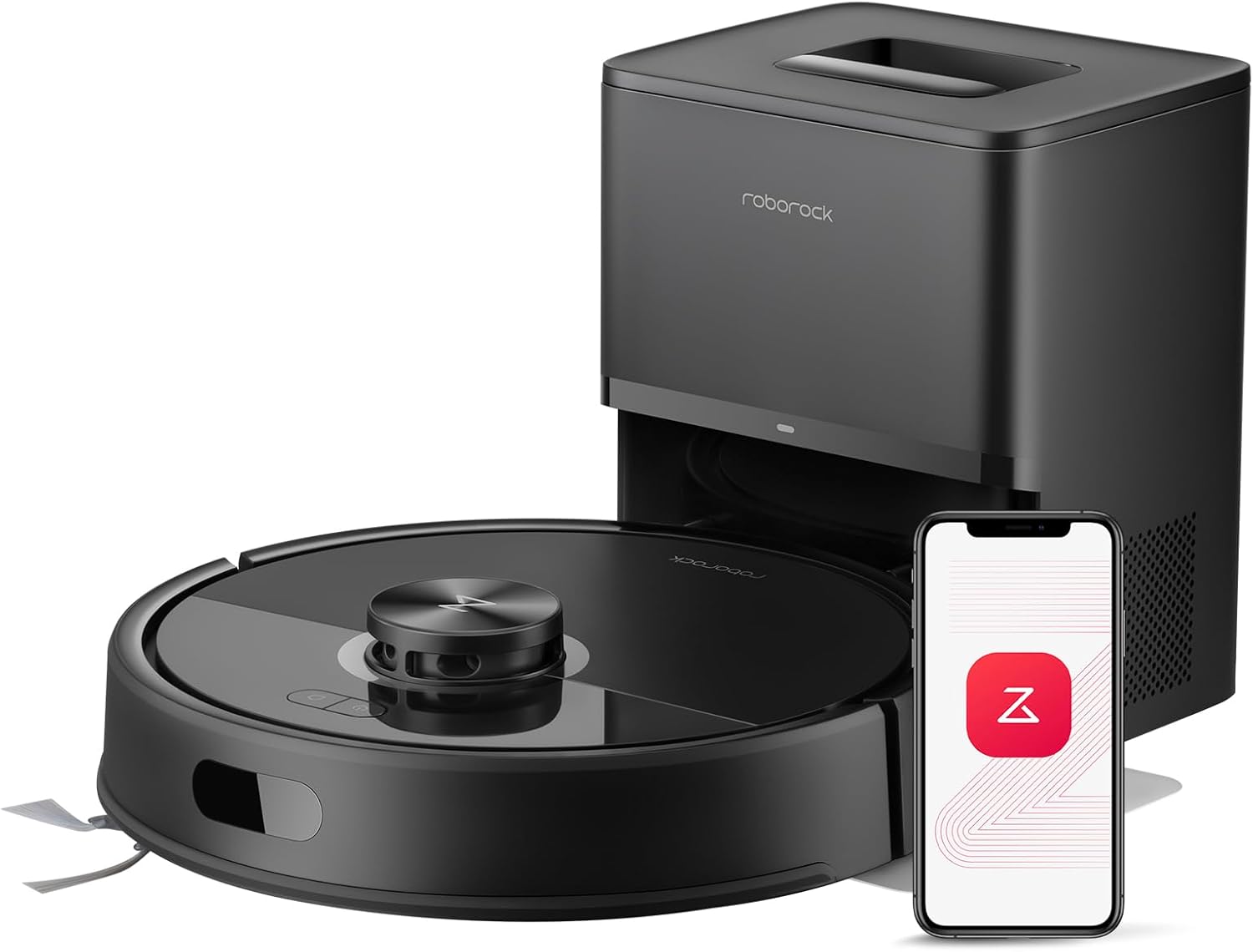 Roborock Q7 M5+ Robot Vacuum with Self-Empty Dock
|
8.6/10 | Buy | |
| Best Premium |
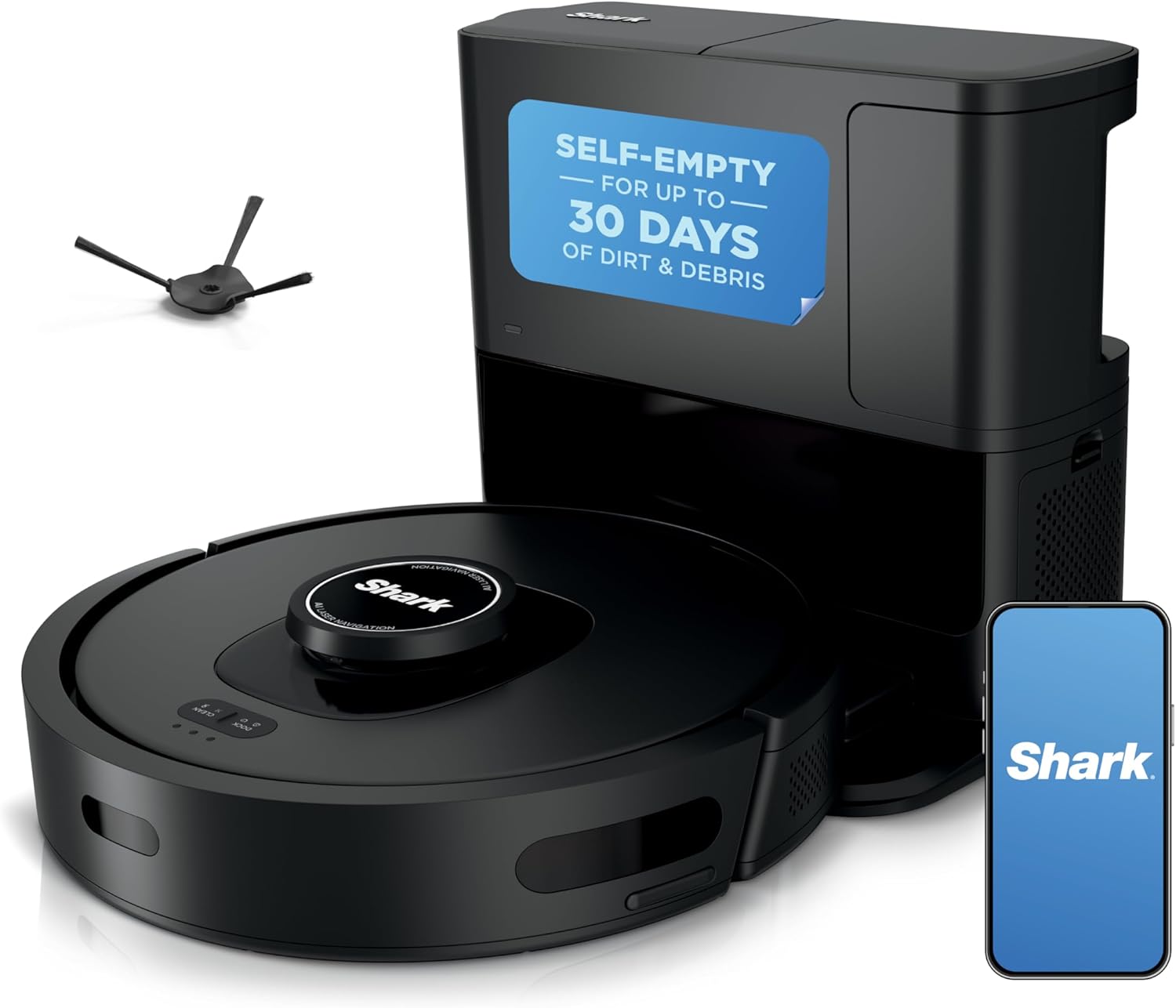 Shark AV2501S AI Ultra Robot Vacuum with Self-Empty Base
|
8.2/10 | Buy | |
| Best Budget |
 WSUANE D15S Max Robot Vacuum, 10000Pa Suction, 90-Day Self-Emptying
|
7.1/10 | Buy | |
 iMartine D16S MAX Robot Vacuum and Mop Combo
|
7.0/10 | Buy |
Roborock Q7 M5+ Robot Vacuum and Mop, 10000Pa
A dual vacuum-and-mop robot with 7-9 weeks of hands-free cleaning thanks to its self-emptying dock and 2.7L dust bag. Built for pet owners with a dual anti-tangle system and PreciSense LiDAR navigation for efficient room mapping.
Pros
- Extended self-emptying capability means less frequent maintenance for busy households
- Dual anti-tangle design and zero-tangling side brush specifically address pet hair challenges
- Electronic mopping with three adjustable water flow settings adds versatility beyond vacuuming alone
- PreciSense LiDAR mapping enables efficient multi-room navigation and optimized cleaning paths
- Full app control with scheduling, temporary cleaning modes, and smart no-go zone creation
Cons
- App requires 2.4GHz Wi-Fi connectivity only, limiting compatibility with some smart home networks
- No obstacle avoidance system included, unlike some competing models in the Roborock lineup
- Relatively short 150-minute runtime may require multiple charge cycles for larger homes
Roborock Q7 M5+ Robot Vacuum with Self-Empty Dock
A dual-function vacuum and mop with 10000Pa suction and LiDAR navigation that empties itself every 7-9 weeks. Strong pet hair performance with anti-tangle brushes, though carpet cleaning shows mixed results in some conditions.
Pros
- Extended self-emptying capability (7-9 weeks between manual emptying) reduces maintenance hassle
- 10000Pa suction power effectively tackles pet hair and debris across hard floors and low-pile carpet
- Dual anti-tangle brush system minimizes hair wrapping compared to standard designs
- PreciSense LiDAR mapping creates precise room layouts on first run, enabling efficient cleaning paths
- Combined vacuum and mop function with adjustable water flow settings in one device
- App control with scheduling, no-go zones, and real-time tracking via smartphone
Cons
- Mopping is secondary to vacuuming and won't replace manual mopping for deep floor cleaning
- Main brush can jam or rotate slowly on medium-pile carpet despite 10000Pa suction, reducing effectiveness on thicker carpets
- App requires 2.4GHz Wi-Fi only and has steep learning curve for multi-floor setup and map saving features
Shark AV2501S AI Ultra Robot Vacuum with Self-Empty Base
The Shark AI Ultra combines strong suction with a 30-day self-emptying base and LiDAR mapping to handle pet hair and daily debris across carpets and hard floors. Matrix Clean navigation provides thorough coverage, though real-world battery life and mapping accuracy fall short of claims for some users.
Pros
- Powerful suction and effective pet hair pickup with self-cleaning brushroll that resists tangling
- 30-day self-emptying base reduces frequent manual emptying and features true HEPA filtration for dust and allergens
- Fast LiDAR mapping and precise grid-based Matrix Clean navigation for methodical coverage
- Up to 120 minutes runtime with Recharge and Resume allows whole-home cleaning in multiple sessions
- Intuitive SharkClean app with room selection, no-go zones, and voice control via Alexa or Google Assistant
Cons
- Mapping occasionally misses large wall sections and requires multiple explore runs for accuracy; single-room Matrix Clean limits efficiency for multi-room cleaning
- Battery performance inconsistent in real use, often returning to dock around 45 minutes instead of full 120-minute claim, especially on higher suction modes
- Setup and WiFi pairing issues reported by multiple users; foam filter in dock requires cleaning every 2-3 runs; evacuation noise rivals upright vacuums
WSUANE D15S Max Robot Vacuum, 10000Pa Suction, 90-Day Self-Emptying
A self-emptying combo vacuum designed for pet owners and busy households, featuring 10,000Pa suction, dToF LiDAR navigation, and an anti-tangle blade brush. The 90-day dustbin capacity and 160-minute runtime reduce maintenance, though real-world pet hair performance and mopping effectiveness remain unverified.
Pros
- Exceptional dustbin capacity eliminates frequent emptying for extended periods
- Multiple suction modes (800Pa to 10,000Pa) adapt to different surfaces and noise preferences
- dToF LiDAR plus 9 sensors (drop, collision, ground detection) enable precise navigation and mapping
- Hair-cutting blade specifically designed to prevent tangling in pet-heavy households
- Extended battery life offers up to 160 minutes per charge on quiet mode
Cons
- Zero verified user reviews limit real-world performance assessment for pet hair and mopping effectiveness
- Mopping capability mentioned in title but not detailed in specifications or features
- Noise level of 70dB in quiet mode may still be audible during operation
iMartine D16S MAX Robot Vacuum and Mop Combo
A 2-in-1 vacuum and mop with 18000Pa suction, bagless self-emptying station, and LiDAR navigation that handles multiple floor types and pet hair effectively. Smart app and Alexa control make it convenient for hands-off home maintenance.
Pros
- Strong suction handles carpets, tiles, laminate, and pet hair without tangling
- Extended runtime and auto-resume after recharge suit large multi-floor homes
- Precise LiDAR mapping and obstacle avoidance with customizable cleaning zones
- Quiet operation doesn't disrupt daily routines while maintaining cleaning power
- Easy setup and intuitive app control even for non-tech-savvy users
Cons
- Limited to 150ml water tank capacity, which may require refills for extensive mopping sessions
- No negative feedback in available reviews limits insight into potential durability or edge-case performance issues
- Dust cup size (220ml onboard) means frequent emptying in heavy-use scenarios despite large station capacity
Robot Vacuums Under $300 Buying Guide
Shopping for a robot vacuum at this price tier means navigating a crowded field where specs are easy to inflate and real-world performance varies more than the product listings suggest.
The criteria below are drawn from the patterns we observed across expert consensus and verified buyer outcomes, and they represent the factors that most reliably separate a genuinely useful machine from one that spends more time stuck under furniture than cleaning your floors.
Pair your new robot vacuum with a capable smart thermostat and other connected devices to build a more automated home routine.
Navigation Technology and Mapping Quality
Navigation is arguably the most important differentiator between a robot vacuum that works and one that frustrates.
LiDAR-based navigation, which uses a rotating laser sensor to build a precise spatial map of your home, is now accessible at this price point and represents a significant upgrade over older infrared or camera-only systems.
Models equipped with LiDAR, such as those using PreciSense technology, can complete room mapping on the first run and remember multi-room layouts for future cleaning sessions, allowing you to set no-go zones and room-specific schedules through an app.
dToF (direct Time-of-Flight) sensors, found in some newer models, offer a similar level of spatial accuracy with a slightly different hardware approach.
What matters most for daily use is whether the robot can reliably navigate around chair legs, avoid getting trapped in cable clusters, and return accurately to its dock.
Buyers who live in open-plan homes with consistent furniture layouts will get the most from advanced mapping, while those in smaller apartments may find even simpler navigation adequate for their needs.
Expert consensus consistently flags navigation as the feature where cheaper robot vacuums most visibly cut corners.
Spending a little more within this budget tier to secure proper LiDAR navigation usually pays dividends in terms of day-to-day reliability and the ability to schedule targeted clean zones rather than running full-floor passes every time.
Suction Power and Floor Type Compatibility
Raw suction figures, often quoted in Pascals (Pa), have climbed dramatically in this segment. You will now see numbers anywhere from around 5,000 Pa to well over 10,000 Pa in sub-$300 models.
Higher suction matters most for carpets, where debris embeds in fibers, and for homes with pets whose hair can pack into rugs quickly.
On hard floors like hardwood, tile, or laminate, the difference between mid-range and peak suction is less perceptible in everyday cleaning.
Look for models that automatically boost suction when transitioning onto carpet, a feature commonly called carpet boost or auto-suction mode.
This prevents the robot from running at full power, and therefore draining the battery faster, on hard floors while still delivering deep cleaning power where it counts.
For multi-surface homes, this adaptive suction behavior is more practically useful than a single high suction number across all surfaces.
Pet owners should pay particular attention to brush roll design.
Anti-tangle brush rolls, sometimes using a dual-roller or comb-integrated design, are specifically engineered to prevent pet and human hair from wrapping around the main brush, which is one of the most common maintenance complaints among verified buyers.
Models that solve this problem well dramatically reduce how often you need to manually clean the brush assembly.
Mopping Capability and Water Management
Vacuum-and-mop combo units have become a genuine option at this price tier, no longer just a marketing checkbox.
The distinction that matters is whether the mop function uses passive drip, where water seeps slowly from a reservoir onto a cloth pad, or a more controlled electronically regulated flow.
Passive mopping works adequately for light dust and residue on hard floors, but it cannot replicate a proper wet mop for stuck-on spills or heavy foot traffic areas.
For homes that primarily need vacuuming with only occasional light mopping, a combo unit offers convenience without meaningful trade-offs.
Households with large areas of tile or hardwood that genuinely need frequent wet cleaning should temper expectations at this price point; the mopping performance here is supplementary rather than a replacement for periodic manual mopping of high-traffic zones.
One practical concern flagged repeatedly in verified buyer feedback is the mop pad dragging over carpets. Better models in this range include a carpet detection feature that automatically raises the mop pad or pauses water flow when transitioning to carpet.
This prevents wet carpet edges and keeps the cleaning cycle running efficiently across mixed flooring layouts.
Self-Emptying Base and Dustbin Capacity

A self-emptying base is no longer a luxury add-on at this price range.
Several strong picks in this segment include a base station that automatically evacuates the robot’s onboard dustbin after each run, compressing debris into a sealed bag or bagless container that only needs attention every few weeks.
This is the feature most responsible for transforming a robot vacuum from a gadget you have to babysit into a genuinely hands-off cleaning tool.
The capacity quoted by manufacturers, often expressed in days of cleaning before the base needs emptying, varies considerably depending on floor size and debris load. In homes with pets or high foot traffic, treat published capacity estimates as optimistic.
Bagless self-emptying systems offer cost savings over time since you are not buying replacement bags, but some buyers find the dust exposure during emptying more noticeable. Bagged systems tend to contain allergens better during disposal, which matters for allergy-sensitive households.
Battery Life and Runtime Per Charge
Runtime matters more than many buyers initially anticipate, particularly in larger homes or multi-story layouts.
Most robot vacuums in this budget range offer somewhere between 90 and 180 minutes of runtime on a single charge under typical conditions, though suction level, floor type, and the use of mopping all affect real-world endurance significantly.
Models with auto-resume functionality, where the robot returns to the dock to recharge and then picks up cleaning exactly where it left off, effectively remove runtime as a practical concern for most home sizes.
A longer battery also provides more scheduling flexibility. If you run the robot on a daily schedule in a medium-sized home, a machine that can complete a full pass without recharging mid-cycle is noticeably less disruptive to your routine.
This is especially relevant in homes where the dock location is not centrally placed. Check verified buyer reviews from owners with floor plans similar to yours for the most reliable runtime guidance.
App Control, Smart Home Integration, and Scheduling

App connectivity has become table stakes even at entry-level prices, but the quality of the app experience varies considerably between brands.
A well-designed app should let you view the cleaned-area map in real time, draw custom no-go zones, set room-specific cleaning frequencies, and adjust suction and water flow levels without needing to physically interact with the robot.
Verified buyer feedback on app stability, specifically regarding connectivity drops, firmware update reliability, and the accuracy of the map editor, is often more revealing than spec sheet claims.
Voice control compatibility via Alexa or Google Assistant is a useful quality-of-life feature, particularly for users who already manage other smart displays and hubs through a voice interface.
The practical value of voice commands for robot vacuums is modest since most users rely on schedules and app triggers rather than real-time voice requests, but broad ecosystem compatibility signals stronger long-term software support from the manufacturer.
Why You Should Trust Us
REMOVU is an independent review publication. We have no manufacturer relationships that influence our recommendations, and every product in this roundup was assessed against the same consistent criteria regardless of brand or price within the category.
We do not conduct our own product trials; our evaluations are grounded in research, published data, expert review consensus, and verified buyer feedback.
Each model in this article was assigned a REMOVU Score on a 0-to-10 scale, reflecting a weighted assessment across navigation quality, suction and cleaning performance, self-emptying convenience, software reliability, and overall value for money within the budget segment.
This score synthesizes publicly available manufacturer specifications, the consistent signal across multiple expert review sources, and the patterns we identify in verified buyer feedback, with particular attention to long-term reliability reports rather than only first-impression reactions.
REMOVU may earn a commission if you purchase through links in this article. That affiliate relationship has no bearing on which products are recommended, how they are ranked, or what scores they receive.
Our rankings are determined solely by the quality of the evaluation. We do not accept payment for placement, and we do not adjust scores based on commercial relationships.
Final Thoughts
The robot vacuums in this roundup represent the strongest options we identified in the sub-$300 bracket after rigorous research and scoring.
Whether your priority is the most advanced LiDAR navigation, reliable pet hair pickup, or the longest self-emptying interval, there is a well-matched pick here. Below are the standout designations based on REMOVU Score and real-world fit:
- Best Overall: Roborock Q7 M5+ Robot Vacuum and Mop (Black) earns the top spot with the highest REMOVU Score in this roundup, combining PreciSense LiDAR navigation, a dual anti-tangle system, and up to seven to nine weeks of hands-free self-emptying into a single package that performs consistently across pet hair, carpet, and hard floors.
- Best for Pet Hair: Shark AV2501S AI Ultra Robot Vacuum is the most capable pick for homes where pet hair is the primary cleaning challenge, earning a strong REMOVU Score thanks to its Matrix Clean home mapping, HEPA-equipped self-empty base, and a large 30-day dustbin capacity that keeps maintenance genuinely minimal.
- Best Budget Pick: WSUANE Robot Vacuum and Mop Combo offers 90-day self-emptying and LiDAR-based smart mapping at the lowest price in this group, making it the most approachable entry point for buyers who want capable navigation without reaching further up the budget range.
- Best for Large Homes: iMartine Robot Vacuum and Mop Combo stands out with its high-suction motor and LiDAR navigation pairing, suited to larger floor plans where thorough coverage per run matters more than compactness or the lowest possible price.
Whichever model you choose from this list, you are getting meaningfully more automation than was accessible at this price just a few product generations ago.
If you are also looking to build out your connected home more broadly, our pet tech category covers additional tools for pet owners, and the security cameras section rounds out the home automation picture for whole-home coverage.
Frequently Asked Questions
Do robot vacuums under $300 really work on carpets?
Yes, several models at this price point deliver genuinely effective carpet cleaning, particularly on low-pile and medium-pile rugs. Models with high suction and automatic carpet boost mode perform noticeably better on carpets than those running at a fixed suction level.
Verified buyer feedback consistently confirms that models with anti-tangle brush systems handle hair-heavy carpets far better than standard brush roll designs.
Deep-pile or shag rugs remain a challenge for nearly all robot vacuums regardless of price, so manual vacuuming for those surfaces is still advisable.
How often do I need to empty the self-emptying base?
Manufacturer estimates typically range from a few weeks to over two months between empties, but real-world intervals depend heavily on floor area, debris load, and whether you have pets. In average-sized homes without pets, the published intervals are reasonably accurate.
Pet owners and households with high foot traffic should expect to empty more frequently.
Bagless bases require disposal of collected dust into a bin, while bagged systems let you remove and seal the bag without contact with the debris, which is a meaningful difference for allergy sufferers.
Is LiDAR navigation worth it compared to camera-based navigation at this price?
For most home layouts, LiDAR navigation produces more reliable and consistent results than camera-based systems, particularly in low-light conditions where camera-dependent models often struggle to map accurately.
LiDAR builds a geometric map using laser pulses rather than visual processing, so lighting conditions do not affect map quality.
At the sub-$300 price tier, the availability of real LiDAR navigation represents genuine progress, and expert consensus consistently rates LiDAR-equipped models higher for navigation reliability across diverse home configurations.
Can a robot vacuum replace a traditional vacuum entirely?
For everyday maintenance cleaning, yes, a good robot vacuum running on a daily or every-other-day schedule can handle the bulk of floor debris in most homes.
Where robot vacuums still fall short is in edge-to-corner coverage in tight spaces, stair cleaning (impossible for all robot vacuums), and deep cleaning sessions on heavily soiled areas.
Most households find the best approach is to use a robot vacuum for frequent light passes and supplement with a traditional upright or canister vacuum for periodic thorough cleans and above-floor surfaces.
Think of a robot vacuum as a maintenance tool rather than a full replacement, and its daily value becomes very clear very quickly.
What smart home ecosystems do these robot vacuums work with?
Most models in this roundup support Alexa and Google Assistant voice control at minimum, with companion apps available for iOS and Android.
Roborock models integrate with the Roborock app, which is widely regarded as one of the more polished robot vacuum apps available, offering detailed map editing, room-labeling, and granular scheduling. Shark’s app provides a similar level of control with SharkClean integration.
If you already have a broader smart home setup including smart locks or video doorbells running through a voice assistant, adding a compatible robot vacuum fits naturally into the same ecosystem without additional hub hardware.
Are robot vacuum and mop combos actually useful, or just a marketing feature?
Combo units at this price point deliver genuine light mopping utility for hard floors, removing surface dust, light residue, and minor smudges with regular use.
The mopping function is best understood as a complement to the vacuuming, not a substitute for manual wet mopping of heavily soiled or sticky surfaces.
Verified buyers who use the mop function consistently report it adds real value for maintaining hard floors between deeper manual cleans.
The key feature to look for is automatic carpet detection that lifts or pauses the mop pad, preventing wet carpet edges during mixed-surface cleaning cycles.
Related Guides
About the author
Maxine is REMOVU's TV writer, comparing OLED, QLED, and LED sets on picture quality, gaming features, and value. She helps readers cut through a crowded field to the right screen.