The 8 Best Noise Cancelling Headphones for Airplanes
Jet engine noise is relentless on long flights. These noise cancelling over-ear headphones, chosen for ANC depth, comfort, and battery life, make the journey far more bearable.
 By Lisa Nelson
Updated July 26, 2026
By Lisa Nelson
Updated July 26, 2026
Airplane cabins are among the noisiest environments most travelers encounter regularly.
The low-frequency roar of jet engines, the hiss of cabin air systems, and the general hum of hundreds of passengers combine into a wall of sound that makes sleep nearly impossible and music listening frustrating without the right gear.
A quality pair of noise cancelling headphones designed for air travel can transform a grueling long-haul flight into a genuinely restful or enjoyable experience.
If you spend any meaningful time in the air, this is one of the most impactful upgrades you can make to your travel kit, and it pays to choose carefully.
At REMOVU, we researched the over-ear noise cancelling headphone market specifically through the lens of air travel: how well each model handles the low-frequency drone of jet engines, how comfortable it stays over long flights, how battery life holds up on multi-leg journeys, and how foldable or packable it is for carry-on bags.
We evaluated every pick by synthesizing published specifications, expert review consensus across the over-ear noise cancelling category, and verified buyer feedback from confirmed purchasers, then assigned each model a REMOVU Score on our 0 to 10 scale.
Our top picks below range from premium options such as Bose and JBL to budget-friendly alternatives from Soundcore by Anker and JLab, covering virtually every budget a traveler might have.
| Award | Product | REMOVU Score About REMOVU ScoreThe REMOVU Score is our own rating from 0 to 10, based on performance, design and build, ease of use, and value. It reflects independent research and is never influenced by manufacturers, retailers, or affiliate commissions. Learn more › | Price | |
|---|---|---|---|---|
| Best Overall |
 Bose QuietComfort Ultra Wireless Headphones
|
9.2/10 | Buy | |
| Best Premium |
 Bose QuietComfort 45 Wireless Headphones
|
8.6/10 | Buy | |
| Best Budget |
 Soundcore Q20i Hybrid ANC Over-Ear Headphones
|
8.2/10 | Buy | |
 Skullcandy Hesh ANC Wireless Headphones
|
7.1/10 | Buy | ||
| Best Value |
 JBL Tune 770NC Wireless Headphones
|
8.1/10 | Buy | |
 JLab JBuds Lux ANC Over-Ear Headphones
|
6.3/10 | Buy | ||
 TAGRY A18 Hybrid ANC Headphones
|
6.2/10 | Buy | ||
 YMOO Y7Pro Noise Cancelling Headphones
|
6.2/10 | Buy |
Bose QuietComfort Ultra Wireless Headphones
The Bose QuietComfort Ultra delivers industry-leading noise cancellation with immersive spatialized audio and customizable sound profiles. Ideal for frequent travelers and audio enthusiasts seeking premium comfort and adaptive listening modes.
Pros
- Superior noise cancellation rivals premium competitors
- Spatialized audio adds depth and dimension to music and movies
- CustomTune personalization ensures optimal sound for individual hearing
- Multiple listening modes adapt to any environment or activity
- Wireless connectivity with reliable performance
Cons
- Premium price point may exceed budget-conscious buyers
- Limited battery life details not provided in product specifications
- Requires app access for full CustomTune personalization features
Bose QuietComfort 45 Wireless Headphones
The Bose QuietComfort 45 delivers industry-leading noise cancellation with 24-hour battery life and lightweight comfort, making them ideal for travelers and remote workers who prioritize peace and call quality. The adjustable EQ and Aware Mode add versatility, though they sit at a premium price point.
Pros
- Best-in-class noise cancellation rivals or exceeds premium competitors
- Exceptional 24-hour battery life reduces daily charging burden
- Lightweight and comfortable for extended wear without fatigue
- Excellent microphone quality for calls and voice commands
- Adjustable noise levels and EQ settings cater to personal preferences
Cons
- Premium pricing limits appeal to budget-conscious buyers
- No included carrying case in standard package
- Bluetooth range limited to 30 feet, typical of wireless headphones
Soundcore Q20i Hybrid ANC Over-Ear Headphones
Hybrid active noise cancellation with dual mics neutralizes up to 90% of ambient noise across trains, offices, and flights. 40-hour battery with ANC on, customizable EQ via app, and 40mm drivers deliver detailed sound suited for commuting, gaming, and travel.
Pros
- Effective hybrid ANC with feedforward and feedback mics, praised by users for blocking everyday noise and long-haul flight noise
- Exceptional 40-hour battery life with ANC enabled, plus 5-minute fast charge yields 4 extra hours of playback
- Soundcore app offers 22 EQ presets and manual tuning for personalized sound, with Transparency mode to hear surroundings
- Dual Bluetooth connections allow seamless switching between devices like laptops and phones with automatic audio routing
- Memory foam ear cups adapt within days, lightweight at 246g, foldable design, and comfortable for extended all-day wear
Cons
- No noise cancellation in wired/AUX mode, only Bluetooth supports ANC functionality
- Some users report discomfort from reverse sound effect when ANC is on without audio playing; headphones may not adjust small enough for smaller head sizes
- No carrying case included despite previous Soundcore models including one; power button sensitivity can inadvertently trigger pairing mode
Skullcandy Hesh ANC Wireless Headphones
The Skullcandy Hesh ANC delivers solid active noise cancellation with a 4-mic system and impressive 22-hour battery life at a budget-friendly price. Best for students and commuters who want effective ANC without premium pricing.
Pros
- Exceptional value: premium ANC performance at under $100
- Extended battery endurance with practical rapid charging capability
- Comfortable over-ear fit with durable, portable design
- Effective noise isolation across multiple frequency ranges
- Reliable Bluetooth connectivity with straightforward controls
Cons
- Limited app integration compared to higher-priced Skullcandy models
- Battery life drops significantly with ANC enabled versus ANC off mode
- No spatial audio or advanced sound customization features
JBL Tune 770NC Wireless Headphones
The JBL Tune 770NC delivers exceptional value with 70 hours of battery life, adaptive noise cancelling, and customizable sound via the JBL app. Best for students, commuters, and anyone seeking budget-friendly wireless headphones without compromising on features or comfort.
Pros
- Exceptional 70-hour battery life eliminates frequent charging and provides week-long listening
- Adaptive Noise Cancelling effectively blocks distractions while Smart Ambient lets you stay aware of surroundings
- Dual Bluetooth device connectivity allows seamless switching between phone and tablet without manual pairing
- Lightweight, foldable construction makes these headphones portable and travel-friendly
- Free JBL Headphones app provides extensive customization with EQ adjustments and feature management
Cons
- Lacks auto play/pause sensor, requiring manual control when removing headphones
- No mention of water resistance rating, limiting durability for outdoor or gym use
- Adaptive Noise Cancelling performance may not match premium competitors at higher price points
JLab JBuds Lux ANC Over-Ear Headphones
The JLab JBuds Lux ANC delivers exceptional value with 70+ hours of battery life, hybrid active noise cancellation up to 35dB, and customizable sound via the JLab App. Best for commuters and travelers seeking premium comfort and long-lasting performance without breaking the bank.
Pros
- Exceptional battery life provides nearly two work weeks per charge, ideal for frequent travelers
- Hybrid ANC with Be Aware mode offers flexibility to cancel noise or stay aware of surroundings
- Cloud Foam cushioning and form-fit earcups deliver comfortable extended wear sessions
- Bluetooth Multipoint and Google Fast Pair simplify multi-device connectivity
- JLab App enables granular control over sound, ANC levels, and hearing safety settings
Cons
- No water resistance rating limits use during workouts or wet environments
- Standard charging (no fast charge mentioned) may inconvenience users needing quick top-ups
- Spatial Audio benefits depend on compatible apps and devices
TAGRY A18 Hybrid ANC Headphones
The TAGRY A18 delivers hybrid active noise cancellation up to 45dB and an impressive 120-hour battery life at an affordable price point. Best suited for frequent travelers, remote workers, and anyone seeking reliable ANC performance without premium pricing.
Pros
- Exceptional 120-hour battery life reduces charging hassle for travelers and busy professionals
- Effective hybrid ANC system handles real-world noise from planes, traffic, and offices
- 6-mic array captures voice clearly during calls, meetings, and online classes
- Comfortable memory foam design suits extended wear without fatigue
- Fast Bluetooth 6.0 pairing and low-latency performance for gaming and video streaming
Cons
- Product description lacks detailed technical specifications and codec support information
- Limited information on maximum ANC effectiveness in extremely loud environments compared to premium competitors
- Foldable design durability and hinge longevity not addressed in available product data
YMOO Y7Pro Noise Cancelling Headphones
The YMOO Y7Pro delivers impressive value with hybrid ANC, 100-hour battery life, and Hi-Res audio support at under $60. Best suited for budget-conscious travelers and commuters who prioritize long battery life over premium build quality.
Pros
- Exceptional 100-hour battery with fast 10-minute quick charge for 5 hours of use
- Effective noise cancellation across low and mid-frequency ranges, ideal for flights and commutes
- Versatile dual-mode connectivity supports both wireless and wired connections seamlessly
- Smart app control with 103-language translation and AI voice interaction features
- Comfortable all-day wear with memory-foam cushions and pressure-free headband design
Cons
- ANC may not effectively reduce high-frequency sounds like human voices
- Build quality and materials not specified, suggesting they may feel less premium than higher-priced competitors
- Bluetooth 6.0 connectivity stability depends on proper ear seal and positioning
Noise Cancelling Headphones for Airplanes Buying Guide
Choosing the right pair of noise cancelling headphones for flying involves more than simply picking whichever model scores highest on a spec sheet.
The cabin environment places unique demands on both the active noise cancellation (ANC) system and the physical design of the headphones. The guide below walks through the six criteria that matter most at 35,000 feet.
ANC Performance at Low Frequencies
Jet engine noise sits primarily in the low-frequency range, roughly 50 Hz to 400 Hz, which is exactly the band where active noise cancellation is most effective when implemented well. Not all ANC systems are created equal, however.
Entry-level implementations reduce ambient noise noticeably but leave a residual hum; premium systems from Bose, in particular, have long set the standard for eliminating that engine drone almost completely.
When evaluating ANC for air travel, look beyond the marketing claim of “up to X dB reduction” and pay attention to verified buyer reports from frequent flyers.
Travelers who log many hours on long-haul routes consistently provide the most reliable real-world perspective on how well a particular pair handles the specific frequency profile of a pressurized cabin.
Hybrid ANC systems, which use both feedforward and feedback microphones, generally outperform single-microphone designs in this environment.
If you also want noise cancellation for desk work or open offices, our coverage of noise cancelling headphones for work explores how ANC performance translates to different acoustic environments.
Comfort Over Long Flights
A pair of headphones that feels fine for a 30-minute commute can become genuinely uncomfortable across a 10-hour transatlantic flight.
Ear cup padding material, clamping force, headband cushioning, and overall weight all contribute to long-wear comfort in ways that are difficult to appreciate from a spec sheet alone.
Memory foam ear cushions consistently earn higher satisfaction ratings from long-haul travelers compared to standard foam or leatherette without meaningful padding depth.
Clamping force is particularly important in pressurized cabins, where slight changes in pressure can heighten sensitivity to anything pressing against your head.
Headphones with adjustable headbands and rotating or swiveling ear cups accommodate a wider range of head shapes and reduce hotspots.
Pay attention to weight as well: a lighter design reduces neck and ear fatigue during extended wear, which matters more on a flight than it does during a gym session.
Verified buyer reviews specifically mentioning “long flight” or “overseas trip” are among the most useful signals when evaluating comfort claims, since those users have actually worn the headphones for the durations that matter to air travelers.
Battery Life and Charging Convenience
Battery life requirements scale directly with how you travel.
A domestic traveler doing two-hour hops can get by with 20 hours of ANC-on playback; someone flying from the US to Asia or Australia needs at least 30 hours to cover the journey without recharging.
It is worth noting that manufacturers publish battery figures with ANC off or at moderate volume, so real-world ANC-on life is typically somewhat lower than the headline number.
USB-C charging has become the standard on most current models and is strongly preferable over proprietary connectors or Micro-USB, since USB-C cables are universally available in airports and on modern aircraft seat-back chargers.
Fast-charge features, which deliver several hours of playback from a short charging window, are a genuinely useful safety net if you board with a depleted battery.
Some models also include a 3.5 mm analog cable for use with in-flight entertainment systems when the battery runs out entirely, which is worth having as a fallback.
Foldability and Portability
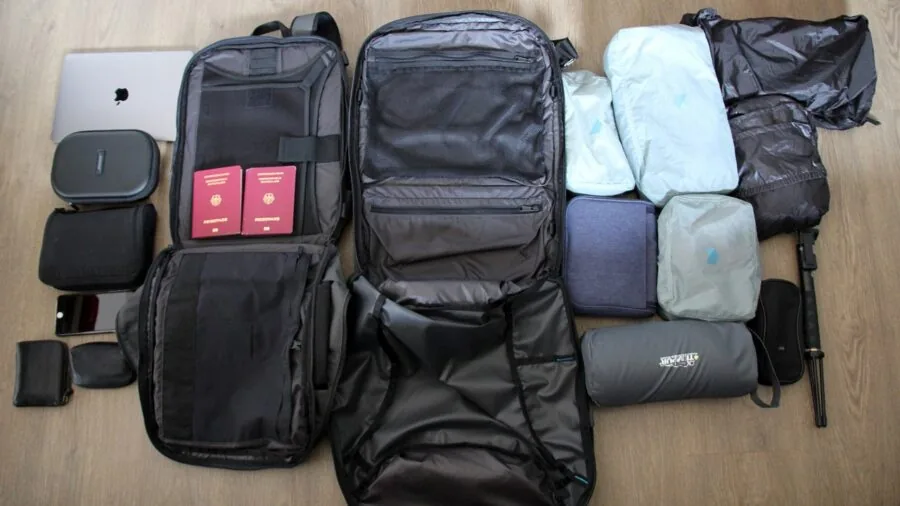
Over-ear headphones are inherently bulkier than noise cancelling wireless earbuds, so foldability is a meaningful design consideration for anyone packing into a carry-on or personal item.
Headphones that fold flat or collapse inward to a compact form factor take up significantly less space in a bag and are less likely to be damaged in transit.
A sturdy carrying case, whether hard-shell or semi-rigid, adds meaningful protection during the chaos of airport security and overhead bin storage.
If you are a minimalist traveler or want a second pair that packs even smaller, our roundup of noise cancelling headphones for every traveler covers both in-ear and over-ear options across different portability priorities.
Sound Quality and Codec Support
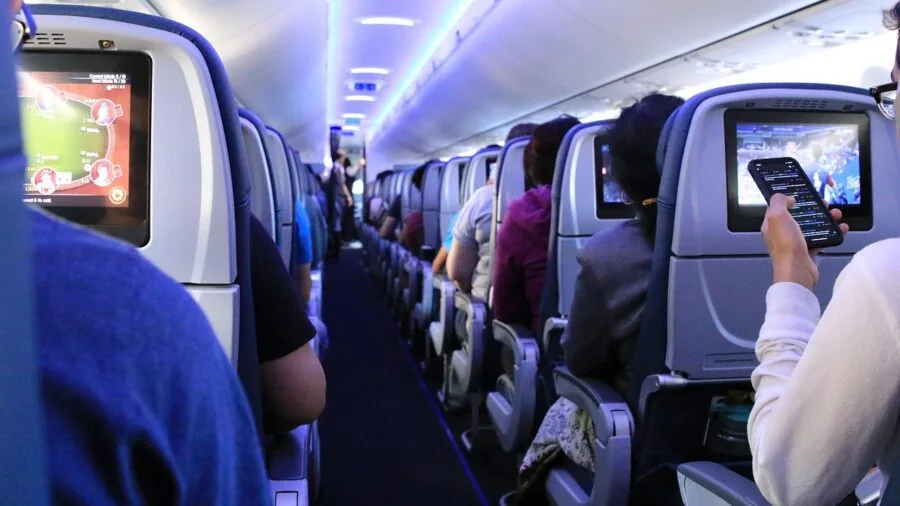
Sound quality matters even in an airplane context, because many travelers use the flight as dedicated listening time for music, podcasts, audiobooks, or movies downloaded offline.
A warm, well-balanced sound signature with reasonable bass response tends to work well in noisy environments, where the ear naturally becomes less sensitive to low-end detail. Overly bright or thin-sounding headphones can feel fatiguing at altitude.
Bluetooth codec support, such as LDAC or aptX HD, enables higher-quality audio streaming when paired with a compatible source device.
However, in-flight entertainment systems typically connect via analog 3.5 mm or USB, bypassing Bluetooth entirely, so codec support matters mainly for your personal device.
Standard AAC and SBC are perfectly adequate for streaming services and downloaded content at the bitrates most platforms use.
For a broader look at how codec support affects wireless headphone performance, our guide to wireless over-ear headphones goes deeper on this topic.
Microphone Quality and Transparency Mode

Even in a travel context, headphone microphone quality matters for layover calls, gate announcements, and conversations with flight attendants.
A headphone with a poor call microphone forces you to take it off every time you need to communicate, which defeats the purpose of a seamless travel experience.
Look for models with dedicated call microphone systems that have earned positive feedback in noisy environments, since cabin conditions are not far removed from the wind and ambient noise that challenge microphones in everyday use.
Transparency mode (sometimes called ambient or hear-through mode) is a genuinely useful feature at airports and on flights.
It lets you hear gate announcements, crew instructions, or a fellow passenger without removing the headphones, which reduces the constant on-off cycle that accelerates ear cup wear.
The quality of transparency mode varies significantly between brands, from natural-sounding implementations to those with an obvious processed quality, so verified user feedback is particularly useful here.
Why You Should Trust Us
REMOVU is an independent review publication. We do not represent any brand, retailer, or manufacturer, and no product is included in our roundups as a result of paid placement or brand relationship.
Every model in this guide was evaluated against a consistent set of criteria specific to air travel use: ANC effectiveness at low frequencies, long-wear comfort, battery endurance, portability, sound quality, and microphone performance.
Each headphone receives a REMOVU Score on our 0 to 10 scale, determined through research synthesis: we analyze publicly available specifications, weigh expert review consensus from credible audio publications, incorporate verified buyer feedback from confirmed purchasers (with particular weight given to reviews mentioning actual travel use), and reference published acoustic and engineering data where available.
We do not conduct our own product trials; our evaluations are grounded in research, published data, expert review consensus, and verified buyer feedback.
This approach allows us to assess a broad range of products consistently and without the bias that can creep into single-reviewer evaluations.
REMOVU may earn a commission if you purchase through a link in this article. That affiliate relationship has no effect on REMOVU Scores, product rankings, or which models we recommend. Our picks are determined by research quality, not commission rates.
If you want to explore the broader over-ear headphones category, our category page covers the full range of options we have evaluated.
Final Thoughts
After synthesizing specifications, expert consensus, and verified traveler feedback across this group, a few standout picks emerged for different types of flyers.
Whether you prioritize absolute ANC performance for a demanding long-haul schedule, a strong mid-range balance of features and value, or the lowest possible price of entry for occasional travel, there is a well-supported option here.
Below are our editorial designations based on REMOVU Score and category strengths.
- Best Overall: Bose QuietComfort Ultra Wireless Noise Cancelling Over-Ear Headphones. The highest REMOVU Score in this group reflects Bose’s consistently top-rated ANC performance, which is particularly effective at the low-frequency drone characteristic of jet engines. Frequent long-haul travelers will find it the most complete package.
- Best Mid-Range Pick: Bose QuietComfort 45 Wireless Bluetooth Noise Cancelling Headphones. A strong REMOVU Score at a noticeably more accessible price than the Ultra, with Bose’s proven ANC heritage and the comfortable over-ear fit that frequent flyers rely on for multi-hour wear.
- Best Value: Soundcore by Anker Q20i Hybrid Active Noise Cancelling Headphones. Earns the highest REMOVU Score among budget-tier picks in this roundup, with hybrid ANC and a long-duration battery that punches well above its price bracket. An excellent entry point for travelers who fly occasionally and want capable noise cancellation without a premium outlay.
- Best for Adaptive Noise Cancelling: JBL Tune 770NC Wireless Over-Ear Headphones. The adaptive ANC system and Smart Ambient mode make this a practical all-around travel companion, with JBL Pure Bass Sound and Bluetooth 5.3 with LE Audio representing genuinely current-generation connectivity.
- Best for Extended Battery Life: YMOO Noise Cancelling Headphones for Airplane. Specifically positioned for air travel with a headline battery figure suited to the longest international routes, wired and wireless flexibility, and LDAC support for high-resolution audio playback. A practical choice for travelers whose primary concern is never running out of power mid-flight.
For travelers who want to compare these picks against a wider field, our roundup of noise cancelling headphones for every budget covers additional options across price tiers and form factors.
Frequently Asked Questions
Do noise cancelling headphones actually help on airplanes?
Yes, and the improvement is substantial for most travelers. Active noise cancellation is particularly well-suited to airplane cabins because the dominant noise source, jet engine hum, sits in the low-frequency range where ANC circuitry is most effective.
Well-implemented ANC can reduce perceived engine noise by a significant margin, making conversation easier, sleep more accessible, and music listening far more enjoyable without cranking the volume to harmful levels.
Passive isolation from the over-ear cushions adds a second layer of attenuation on top of the active system.
Are over-ear headphones better than earbuds for flights?
For most travelers on flights longer than two or three hours, over-ear headphones have the edge.
They deliver stronger passive isolation, tend to house larger ANC hardware, and distribute pressure more evenly than in-ear designs, reducing ear fatigue on long journeys.
That said, wireless earbuds are more portable and easier to store, which makes them a reasonable compromise for short-haul travelers or those with limited bag space.
The best choice depends on your flight duration, how much you value comfort versus packability, and personal fit preferences.
Can I use Bluetooth headphones on an airplane?
Yes. Regulations in most countries, including FAA rules in the United States, permit Bluetooth devices during all phases of flight, including takeoff and landing.
Most airlines actively support Bluetooth audio for in-flight entertainment systems on newer aircraft, and those that do not typically provide a 3.5 mm or USB-A output at the seat.
For the latter situation, a headphone that includes a wired cable as a fallback is a practical advantage. Always confirm the specific policy with your airline before your flight if you are uncertain.
How much battery life do I need for a long-haul flight?
A general guideline is to look for at least 30 hours of ANC-on battery life if you regularly fly routes longer than 10 hours, since manufacturer figures are often measured under optimized conditions and real-world ANC-on life is somewhat lower.
For shorter domestic routes, 20 hours is typically sufficient with room to spare. Fast-charge capability is a useful backup regardless of total battery life.
Several picks in this guide, including the wireless noise cancelling headphones we have evaluated more broadly, advertise battery life well suited to even the longest international itineraries.
What should I look for in a headphone carrying case for travel?
A good travel case for over-ear headphones should be at minimum semi-rigid, with enough structure to protect the ear cups and headband from compression in a packed bag. Hard-shell cases offer the best protection but add bulk.
Look for internal organization that keeps the charging cable and any accessories separate from the headphones to prevent scratching. If the headphones fold flat, the case should accommodate that folded position rather than forcing an awkward angle.
Cases that include a carabiner clip or external attachment point are useful for clipping to the outside of a backpack when space inside is at a premium.
Is it worth spending more on premium noise cancelling headphones for flying?
For frequent flyers, the answer is generally yes.
The gap in ANC effectiveness between a budget model and a well-regarded premium option is most apparent in exactly the conditions you encounter on an airplane: sustained low-frequency noise at consistent intensity over many hours.
That said, the budget options in this roundup deliver genuine value for occasional travelers who fly a few times a year.
If you are unsure where your needs fall, our guide to over-ear headphones for every listener provides additional context on where the meaningful performance thresholds lie across price tiers.
About the author
Lisa is REMOVU's smart thermostat writer, weighing energy savings, features, and system compatibility. She helps readers add comfort and remote control while trimming their bills.